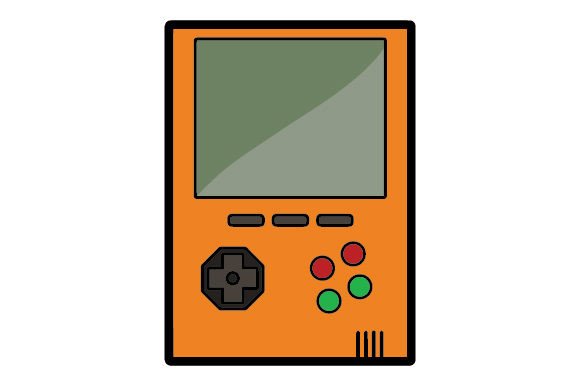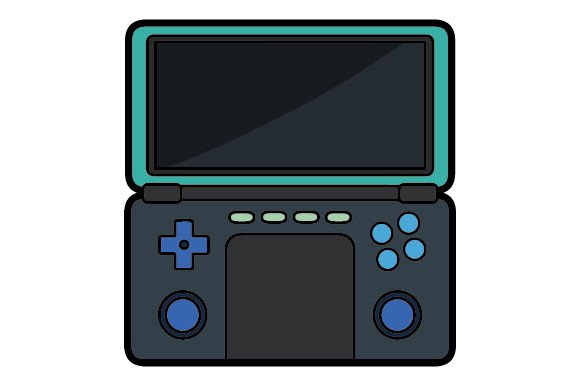
Handheld Clamshell Game Emulator for Crafts & Video Games
As a brand designer who works almost exclusively with local businesses, I’m always looking for graphic design assets that do more than just look pretty. They need to communicate a brand’s personality, support product labels, and hold up across packaging, social media, and print. When I first came across the Handheld Clamshell Game Emulator asset, I was immediately drawn to its retro-meets-modern energy. It’s not just a nostalgic symbol for video game fans—it’s a surprisingly versatile piece of clipart that can anchor a brand identity for a handmade business, a boutique café, or a creative shop. Let me walk you through how I evaluated it for a real local branding project, and what you need to know before using it for your own small business.
First Impressions: A Retro Tech Charm for Modern Branding
The Handheld Clamshell Game Emulator strikes a playful, bold, and slightly nostalgic mood. It’s not trying to be ultra-premium or minimalist. Instead, it feels friendly, handmade, and decorative—like something you’d find on a craft fair sticker or a limited-edition product label. The clamshell form instantly evokes early handheld gaming, but the clean vector style keeps it from looking dated. It suggests a brand personality that is youthful, creative, and unpretentious. For a small business, that’s gold. Whether you’re running a coffee shop, a bakery, a skincare brand, or a children’s product line, this asset can inject a dose of fun into your brand identity without feeling childish.
I decided to test it on a real project: a local retro gaming café called Pixel Brew. The owner wanted packaging for coffee beans, pastries, and merchandise that felt both professional and nostalgic. The Handheld Clamshell Game Emulator became the hero graphic across their product labels, hang tags, and social media graphics. It fit perfectly with the café’s blend of video games and crafts—think handmade ceramic mugs, custom stickers, and artisan coffee.
Real Project Application: Branding a Local Retro Gaming Café
For Pixel Brew, I used the Handheld Clamshell Game Emulator as a central element in their logo design and packaging design. The asset’s clean lines made it easy to combine with a bold sans-serif font for the main logo. On coffee bags, the emulator sat above the brand name, creating a strong visual hierarchy that helped the product stand out on a crowded shelf. I also used it as a repeating pattern on thank-you cards and menu graphics. The SVG design format gave me full control over color and scaling, which is essential when you’re moving from a product mockup to a final print file.
Beyond the café, I can see this asset working beautifully for a handmade soap business that wants a playful, unisex vibe, or a boutique selling retro-inspired home decor. The Transparent PNG version is ready to drop into Canva templates or social media graphics without any fuss. For a florist or candle brand, the emulator could be repurposed as a seasonal packaging accent—imagine a limited-edition “Game Night” candle with the clamshell printed on the label. It’s that flexible.
Where This Asset Shines in Packaging and Promotional Design
In my testing, the Handheld Clamshell Game Emulator performed best in these specific applications:
- Product labels – especially for coffee, tea, snacks, and small-batch goods. The emulator adds a decorative touch without overwhelming the product name.
- Packaging accents – use it as a hero graphic on the front of a box or as a subtle watermark on the inside flap.
- Promotional banners – for website headers or marketing visuals, the emulator creates an immediate emotional connection with retro gaming fans.
- Thank-you cards and stickers – these are perfect for handmade businesses that want to leave a memorable impression.
- Seasonal packaging – pair it with holiday colors for a limited edition run. It works well on product mockups before you commit to print.
- Social media campaign graphics – the PNG design is easy to layer over photos or brand colors for Instagram and Facebook posts.
When you place this asset on a product label or a business card, it immediately signals that the brand is creative, modern, and approachable. That translates into stronger first impressions, better product recognition, and improved customer trust. For a local business competing with big chains, these small details matter.
When to Use with Caution
No asset is perfect for every situation. The Handheld Clamshell Game Emulator has a strong visual personality, so it’s not ideal for formal corporate branding or luxury minimalist brands. If your brand relies on a quiet, understated aesthetic, this decoration will compete for attention. I also recommend caution when using it on very small labels (under 2 inches) or crowded product packaging where there’s already a lot of text. The emulator’s details, while clean, can become muddy if scaled down too much or placed on a low-contrast background.
In ingredient-heavy layouts or legal information areas, this asset should be avoided entirely. It’s a decorative element, not a functional one. Also, if you’re working with a luxury minimalist brand that uses only a single color and lots of white space, the emulator’s playful vibe will feel out of place. As always, test it on a real packaging mockup before committing to a print run.
Practical Designer Notes for Small Business Branding
Here are the key tests I ran before using the Handheld Clamshell Game Emulator for Pixel Brew. I recommend you do the same for your own commercial design work:
- Check black and white usage – the asset should still be recognizable when printed in grayscale. I tested it on a product label in B&W and it held up well.
- Preview on small labels – scale it down to 1 inch. If the clamshell loses its shape, you may need to simplify the illustration or use a larger version.
- Test with brand colors – because the asset comes as an SVG design, I could easily recolor it to match Pixel Brew’s turquoise and orange palette. That’s a huge advantage for brand identity consistency.
- Compare with competitor packaging – I looked at other local coffee shops to make sure the emulator made Pixel Brew stand out, not blend in.
- Check print quality – the EPS and DXF formats are great for professional printing, but always request a proof.
- Review PNG transparency – the Transparent PNG worked seamlessly in Canva templates and social media graphics.
- Inspect SVG editability – open the SVG design in your vector editor and make sure each element is separate for easy manipulation.
- Test font pairings – I tried the asset beside a serif font (vintage feel), a sans serif font (modern), a script font (playful), and a handwritten font (crafty). It worked best with bold sans serif and handwritten styles. Avoid pairing it with a delicate script if you want to keep the visual hierarchy clear.
- Confirm commercial licensing – before using any design assets for client work or physical product sales, always check the license. This asset is listed as commercial design ready, but each creative marketplace has its own terms.
These steps help you avoid costly mistakes and ensure the asset actually strengthens your professional branding rather than weakening it.
In the end, the Handheld Clamshell Game Emulator is a graphic design asset that punches above its weight for small business branding. It’s not just a digital product for video games or crafts—it’s a tool that can help local business owners create professional packaging, memorable marketing visuals, and a brand identity that feels both nostalgic and fresh. If you’re a handmade seller, a product seller, or a creative entrepreneur looking to elevate your product presentation, I’d recommend giving this asset a test run on a product mockup. You might be surprised how much personality one small clamshell can bring to your brand.